
passportreader.app
API for high-assurance identity verification — scan passports, ID cards, and digital wallets with cryptographic verification.
| What is it | API for high-assurance identity verification — scan passports, ID cards, and digital wallets with cryptographic verification. |
|---|---|
| Pricing | Paid |
| Free tier | Yes |
| Platform | API |
| API | Yes |
| Best for | remote customer onboarding, secure employee verification |
| Domain registered | 2020 |
Data updated Sept. 19, 2026
What does passportreader.app do?
passportreader.app is an API service that provides high-assurance identity verification by reading and validating government-issued documents. It works with physical passports, ID cards (via scanning or NFC chip reading), and digital wallet credentials. Each document's data is cryptographically signed by the issuing government, and passportreader.app verifies these signatures against official certificate chains to confirm authenticity and prevent tampering.
The service stands out by combining multiple verification methods in one unified flow. Developers can integrate it with just a few lines of code, making it accessible for various applications. It offers optional additional security layers like real-time face matching and liveness detection for scenarios requiring stronger assurance. The pricing starts at $0.10 per verification with 250 free verifications included for testing.
This tool is particularly valuable for fintech companies needing secure customer onboarding, identity providers looking to enhance their verification flows, and government agencies requiring reliable access control. It's also used for workforce management, travel check-ins, marketplace trust, and age-gated commerce where verifying identity without collecting personal data is essential.
Key features
What makes it stand outWho is passportreader.app for?
Who benefits most from this toolPricing
Free tier available — start without a credit cardStandard
- 0.1 price per verification
- Passports and ID cards
- Digital wallets
- Face matching and liveness detection
- Native SDK for embedded identity
- Self-serve access
- Monthly billing
Custom
- Passports and ID cards
- Digital wallets
- Face matching and liveness detection
- Native SDK for embedded identity
- Tailored access and billing
- Lower unit price with volume
Trust & presence
Gallery
Click any image to enlargeAlternatives in AI API
 Face++
Verified
AI API
Face++
Verified
AI API
Enterprise-grade facial recognition API for identity verification, liveness detection, and computer vision applications
 LoginLlama
Verified
AI API
LoginLlama
Verified
AI API
AI-powered API that detects suspicious login attempts in real-time to prevent account takeovers and credential stuffing
 Link Shield
Verified
AI API
Link Shield
Verified
AI API
API that scans URLs in real-time to detect phishing, malware, scams, and other security threats with actionable risk scores.
 LEKT AI
Verified
AI API
LEKT AI
Verified
AI API
Enterprise-grade API platform for document processing, data transformation, and content creation.
 Dial
Verified
AI API
Dial
Verified
AI API
API for AI agents to get a real phone number with voice, SMS, and iMessage
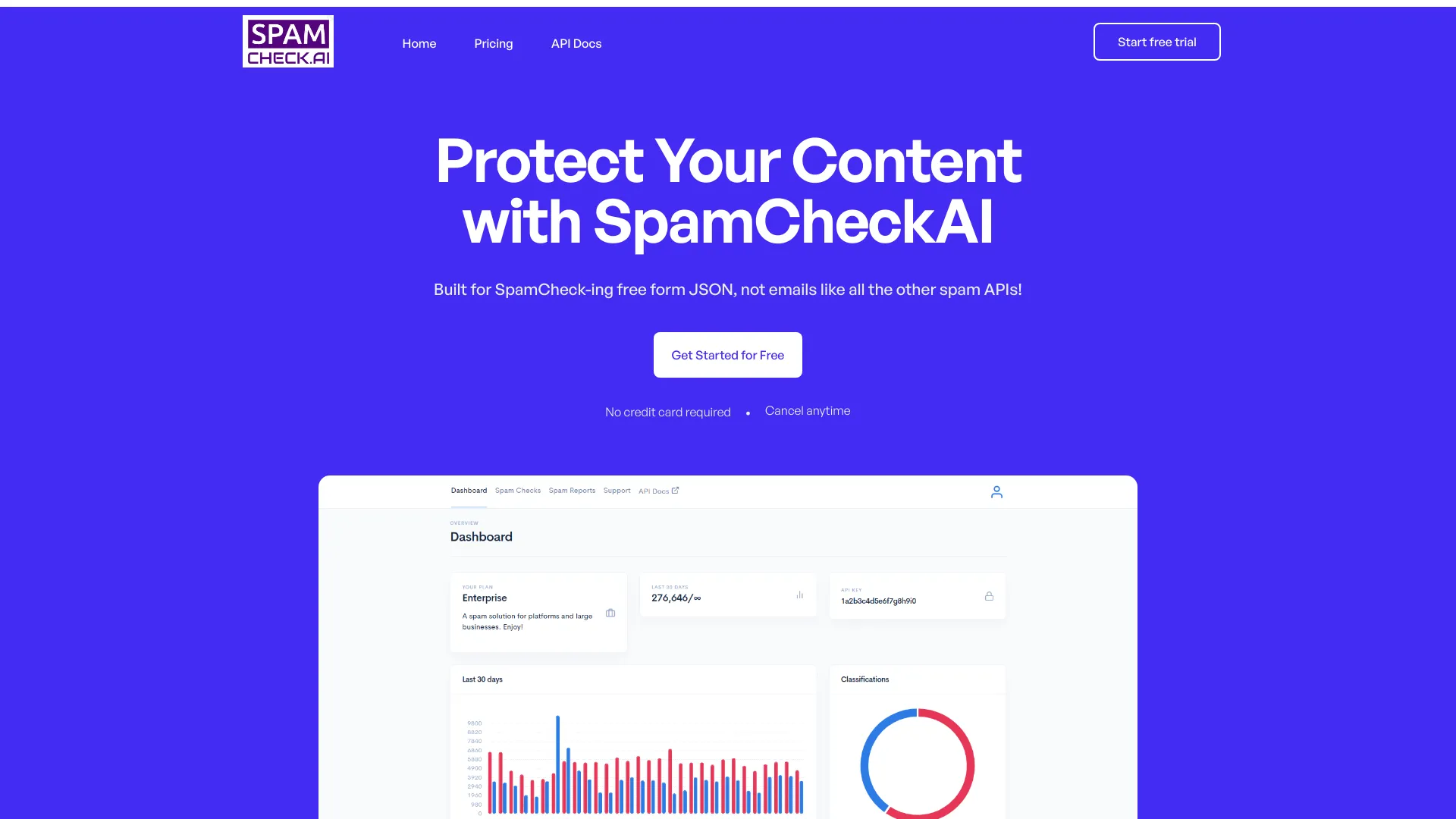 Protect Your Content with our Spam API
Verified
AI API
Protect Your Content with our Spam API
Verified
AI API
AI-powered spam detection API — analyze emails, IPs, URLs, and free-form JSON content to block spam effectively
 Apifree
Verified
AI API
Apifree
Verified
AI API
A unified API platform for accessing multiple leading AI models (LLMs, image, video) with a single integration.
 Modellix
Verified
AI API
Modellix
Verified
AI API
Unified API for AI image, video, audio, and 3D generation — access 170+ models through one endpoint
Similar tools
 IDScan.net
Verified
Fraud Detection
IDScan.net
Verified
Fraud Detection
AI-powered identity verification platform that scans IDs to prevent fraud, verify age, and automate data entry.
 Pruvly AI
Verified
Fraud Detection
Pruvly AI
Verified
Fraud Detection
AI-powered identity verification platform — verify documents and faces, detect fraud, and ensure compliance in seconds.
 Entrust
Fraud Detection
Entrust
Fraud Detection
AI-powered identity verification platform that authenticates IDs and detects fraud using document scanning and facial biometrics
 Idenfy
Verified
Fraud Detection
Idenfy
Verified
Fraud Detection
AI-powered identity verification service for businesses — checks IDs, screens for fraud, and ensures KYC/AML compliance.
 IDfy
Verified
Fraud Detection
IDfy
Verified
Fraud Detection
AI-powered identity verification and fraud prevention platform for businesses - verify customers, employees, and partners securely.
 Face Recognition, Liveness Detection, ID Document
Verified
Developer Tools
Face Recognition, Liveness Detection, ID Document
Verified
Developer Tools
AI-powered identity verification SDKs for face recognition, liveness detection, ID document scanning, and deepfake detection.
 Beyond Identity
Verified
Technical Specifications
Beyond Identity
Verified
Technical Specifications
Passwordless authentication platform that cryptographically binds logins to specific devices to block identity-based attacks.